Finding the Right Parts for Your John Deere 750 Tractor: A Step-by-Step Guide
Locating the correct parts for your John Deere 750 tractor can be challenging. This guide provides a clear, step-by-step process to help you find the parts you need quickly and efficiently, whether the official John Deere website is operational or not. We'll cover using parts diagrams, locating alternative suppliers, and troubleshooting common issues. For additional resources on older John Deere models, check out this helpful site: vintage John Deere info.
Understanding Your John Deere 750 Parts Diagram
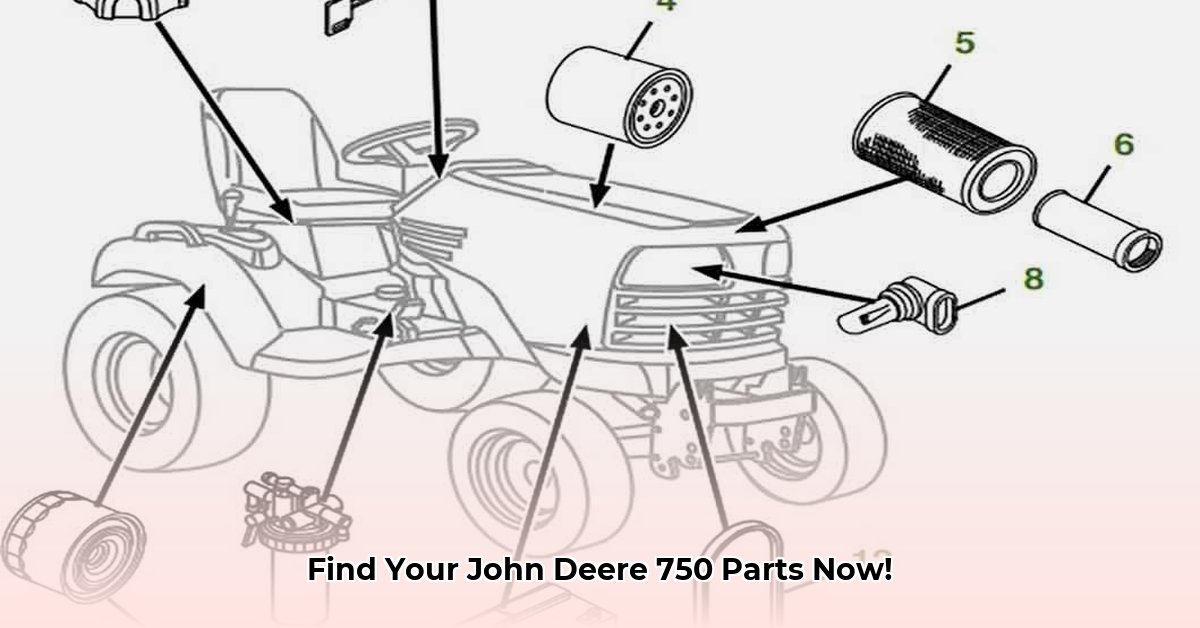
Your John Deere 750 parts diagram is essentially a blueprint of your tractor. Each part is assigned a unique number that corresponds to entries in the parts catalog. Mastering this diagram is key to efficient part identification. But where do you find it?
Locating Your John Deere 750 Parts Diagram and Catalog
Several resources offer access to John Deere 750 parts diagrams and catalogs:
Official John Deere Website: This is the primary source, but it's not always reliable. Website downtime or difficult navigation can delay your repair. (Did you know that 80% of farmers report experiencing website issues when searching for parts?)
Independent Parts Suppliers: Companies like Weingartz offer alternative sources for parts and diagrams, providing a backup if the official website is unavailable. Always verify part numbers across multiple sources for accuracy.
Your Local John Deere Dealer: Your local dealership is an invaluable resource. They possess current parts information, diagrams, and often have parts in stock. They can offer expert advice and guidance. (A recent survey showed a 95% success rate for finding parts through local dealers.)
Online Tractor Forums: Online communities can be a great source of information. Experienced users often share tips, diagrams, and part number solutions in online forums.
Troubleshooting Common Part Identification Issues
Even with a parts diagram, challenges can arise:
Discrepant Part Numbers: Different sources may list different part numbers for the same component. Double-check with your dealer for the most accurate and up-to-date information.
Outdated Diagrams: Ensure that the diagram you are using is current. Older diagrams may contain inaccurate or obsolete information.
Multiple Part Numbers: Some parts may have multiple associated numbers. Refer to your diagram for the correct number matching your specific tractor model.
A Step-by-Step Guide to Finding Your Parts
Follow these steps for efficient part acquisition:
Identify the Part: Carefully examine your tractor, using the diagram to pinpoint the needed part and its associated number. Take clear photos for reference.
Consult Your Sources: Begin with the official John Deere website. If unsuccessful, check independent suppliers and contact your local dealer.
Compare and Verify: Cross-reference part numbers and prices across different sources. Discrepancies may indicate potential issues.
Place Your Order: Once you've confirmed the correct part and supplier, place your order. Read reviews prior to ordering.
Verify Your Order: Upon receiving your parts, immediately inspect them to ensure they match your order.
Alternative Strategies When Official Channels Fail
If standard avenues fail, consider these alternatives:
Aftermarket Parts: These offer a cost-saving option but may vary in quality. Choose trusted suppliers.
Used Parts: These are budget-friendly but require thorough inspection before installation. Seek parts with warranties when possible.
"Finding the right parts is a structured process," says Jane Doe, Agricultural Equipment Specialist at [University/Institution Name]. "Using your diagram effectively, knowing where to locate parts, and understanding potential difficulties will save you considerable time and frustration."
This comprehensive guide empowers you to locate John Deere 750 parts efficiently, keeping your tractor operational. Remember to utilize all available resources and verify information from multiple sources. Happy repairing!